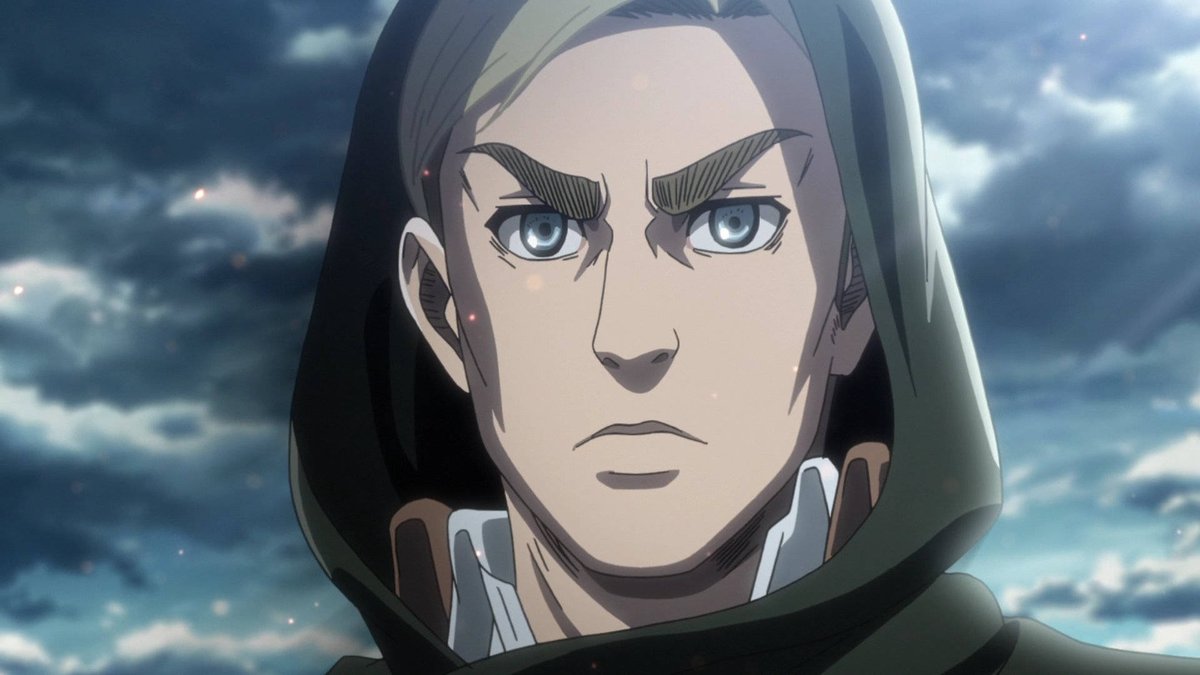
What happens when you bring the unwavering, morally ambiguous commander of the Survey Corps, Erwin Smith, into a conversation about the serene, introspective world of Frieren: Beyond Journey's End? At first glance, the two series seem worlds apart: one a high-octane battle for survival against monstrous Titans, the other a contemplative journey of an elven mage reflecting on humanity and time. Yet, delve deeper, and you'll uncover fascinating character parallels and thematic echoes that resonate with surprising clarity.
This super pillar hub article aims to bridge these seemingly disparate worlds, inviting you to explore how the strategic brilliance, profound sacrifices, and complex humanity of Erwin Smith find unexpected reflections in the leadership, legacy, and emotional landscapes of Frieren. Prepare to examine what it truly means to lead, to bear the weight of difficult decisions, and to leave a lasting mark on the world, whether through a desperate charge or a quiet, long-lived journey.
The Unyielding Commander: Erwin Smith's Strategic Brilliance and Unwavering Resolve
Erwin Smith stands as one of anime's most iconic and formidable leaders. As the 13th commander of the Survey Corps, he was a man defined by his extraordinary intellect, strategic foresight, and an iron will that pushed humanity to its limits. He masterminded the innovative Long-Distance Enemy Scouting Formation, a tactical genius move designed to minimize casualties in the perilous expeditions beyond the walls. Erwin's discerning mind was always several steps ahead, orchestrating complex plans like securing custody of Eren Yeager's Titan powers and executing the daring coup d'état that overthrew the corrupt Royal Government. He was an eloquent speaker, capable of swaying even the most terrified soldiers towards a seemingly suicidal mission, always with the greater good of humanity as his stated goal.
However, Erwin's leadership was never simple or purely heroic. It was steeped in a brutal pragmatism that often required immense sacrifice, a burden he carried with visible gravity. He was willing to sacrifice his soldiers, and even his own arm, for the cause, turning every resource—including mindless Titans—into a weapon. To understand the full scope of his command and how his methods might translate or contrast within Frieren's magic-infused world, you'll want to dive . His strategic brilliance wasn't just about winning battles; it was about orchestrating an entire paradigm shift for humanity, a level of foresight that few could ever hope to achieve. If you're curious about how such a mind would approach the unique challenges presented by demons and ancient magic, we also take a closer look at .
The Weight of the Crown: Leadership, Sacrifice, and Moral Calculus
Erwin's journey was fraught with an immense personal burden. While outwardly stoic and calculating, his primary, deeply personal motivation stemmed from a childhood tragedy: the innocent revelation of his father's suppressed theories about the world's truth, which led to his father's murder. This drove Erwin to reach the basement in Shiganshina, a dream he admitted was even more important than humanity's survival. This internal conflict—his personal ambition versus his public duty—was a constant moral tightrope walk, and he felt profound remorse for every life sacrificed for his grand designs. Ultimately, in his final moments, he chose to sacrifice his own life and dream for the cause, empowering Levi to secure humanity's future.
This profound sense of responsibility and the moral dilemmas leaders face are central to both narratives. We see similar weights carried by characters in Frieren, albeit in different forms. Himmel the Hero, with his unwavering idealism, bore the burden of being a symbol for humanity, inspiring hope rather than fear. Frieren herself, though often detached, grapples with the weight of her long life, the memories of her companions, and the responsibility of nurturing the next generation. To understand these complex layers of command and personal cost, we urge you to read . This exploration helps us appreciate the multifaceted nature of leadership and the diverse ways characters confront their monumental responsibilities, further allowing us to who embody similar struggles or ideals.
Shaping the Future: Legacy, Meaning, and Succession
One of Erwin Smith's most enduring contributions was not just his strategic victories, but his philosophy on life, death, and legacy. In his final, impassioned speech before the suicide charge, he rallied his terrified recruits by stating that while their individual lives might seem meaningless, their deaths would gain meaning because the living would refuse to forget them. He commanded them to entrust their successors with that meaning, to "push forward," "scream out," and "rage." This act of passing the torch, of entrusting meaning to the future, culminated in Levi's heart-wrenching decision to let Erwin die peacefully, freeing him from his burdens, and instead using the Titan serum to save Armin Arlert – the chosen successor to Erwin's strategic brilliance.
This theme of legacy, memory, and succession is the beating heart of Frieren. The entire narrative centers on Frieren's journey to understand the meaning Himmel and her companions left behind, and her role in guiding Fern and Stark to create their own. The very idea that lives gain meaning through remembrance and the continuation of purpose profoundly echoes Erwin's final rallying cry. For a deeper dive into this vital connection, consider examining . Furthermore, the intricate dynamic of choosing a successor and the act of mentorship are crucial in both stories. To fully appreciate how these transitions are handled, explore .
Beyond the Stoic Facade: The Humanity Behind the Hero
Beneath Erwin's perpetually serious and calculating exterior lay a complex individual driven by profound curiosity and, eventually, immense remorse. His initial motivation to prove his father's theories stemmed from an innocent, childlike desire for truth. As a leader, he appeared stoic, but the weight of his decisions and the lives lost for his ambition undeniably took a toll, a hidden emotional depth that only a select few, like Levi, ever truly glimpsed. His final moments, free from the burden of his dream and his command, hint at a quiet yearning for peace.
This exploration of humanity, often hidden beneath layers of duty or otherworldly detachment, is a core strength of Frieren. Frieren, an elf who has lived for over a thousand years, begins her journey emotionally detached from the fleeting human experience, only to slowly learn to understand and cherish human emotions, friendship, and the significance of "firsts." Himmel, despite being a legendary hero, was profoundly human in his kindness, vanity, and unwavering belief in others. Exploring these hidden depths and the slow unfolding of genuine human connection, you’ll discover fascinating insights by reading . Ultimately, both narratives challenge us to question , revealing that true strength often lies not just in power, but in the nuanced understanding and acceptance of one's own, and others', humanity.
By examining these powerful parallels, we gain a richer understanding of what makes a character compelling and a narrative enduring. The seemingly stark contrast between Erwin's high-stakes warfare and Frieren's reflective journey only serves to highlight the universal themes of leadership, sacrifice, memory, and the intricate tapestry of human (and elven) emotion that bind us all. What other connections do you see between these two incredible worlds? The conversation is just beginning.